Coefficient of restitution Calibration
Anarock Framework
Analytical derivation and calibration of restitution coefficients for robust rockfall modelling
Patras • Greece | Available for projects nationwide
Parameter Uncertainty in Rockfall Modelling
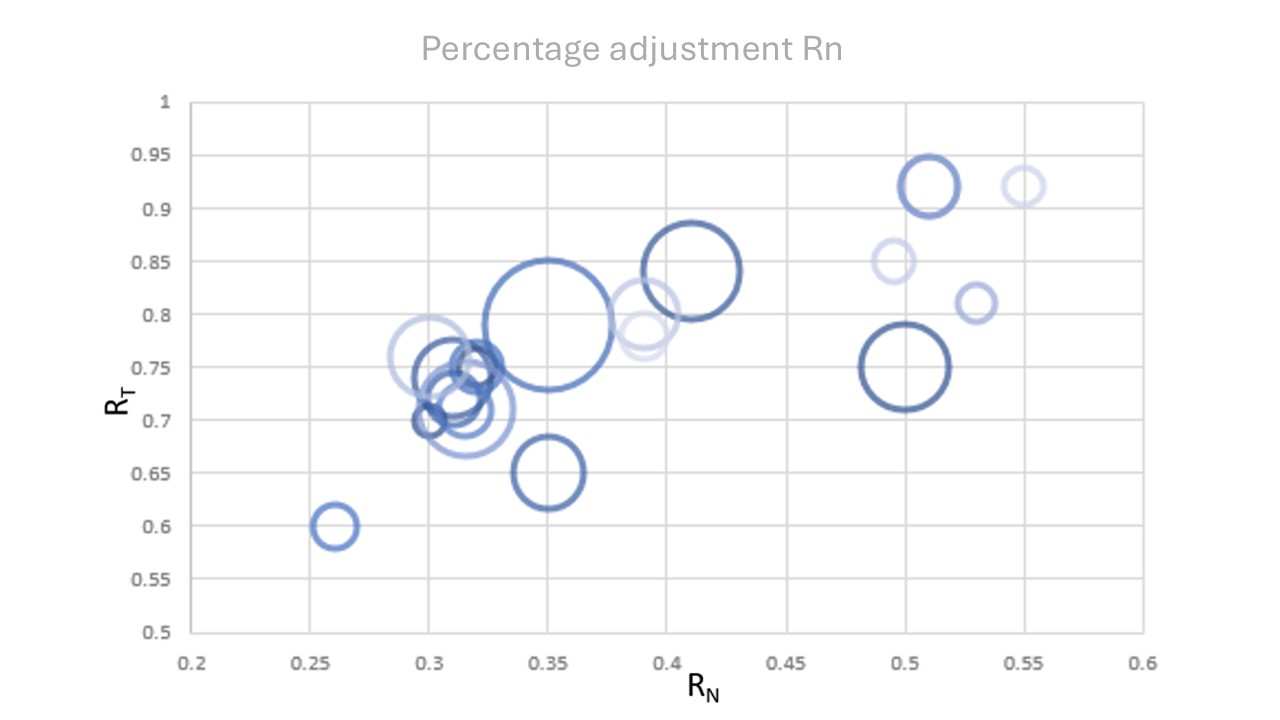
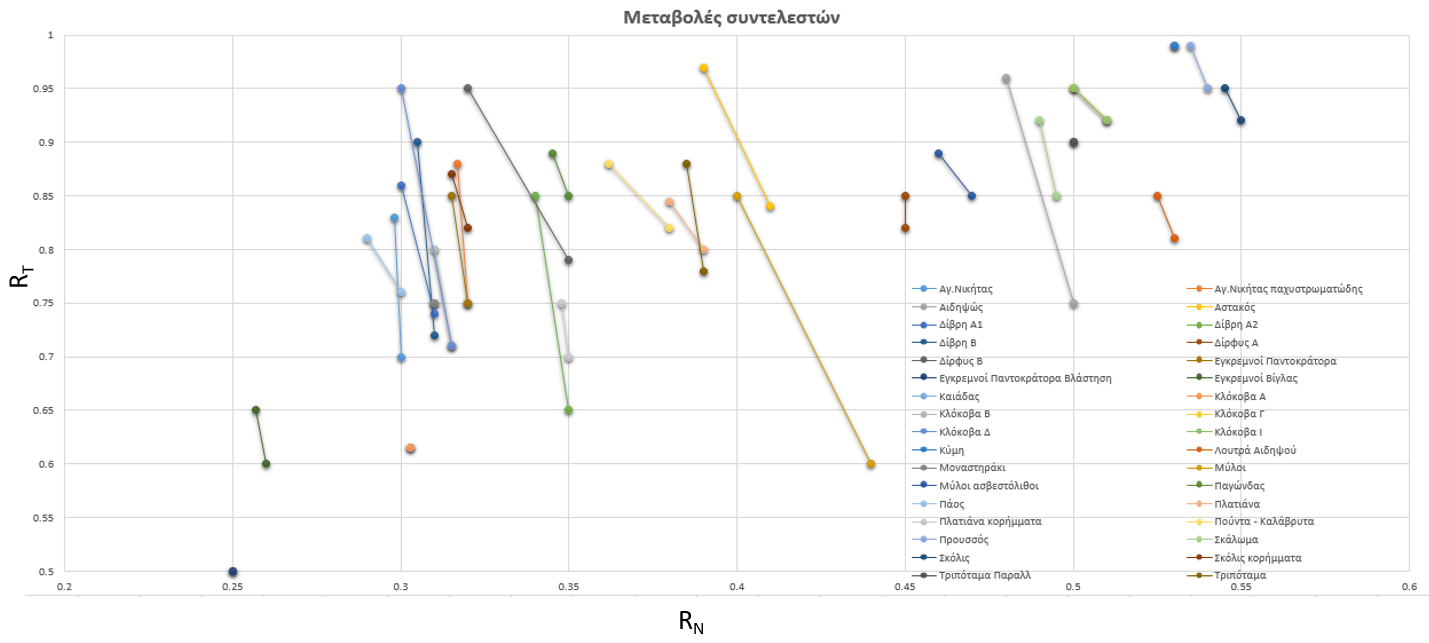
Rockfall simulations are highly sensitive to variations in restitution coefficients (Rn, Rt).
Literature-based parameter ranges frequently introduce modelling uncertainty due to the wide dispersion of reported values.
Small adjustments in Rn or Rt can significantly alter bounce height, energy dissipation and runout behaviour.
Notably, different Rn – Rt combinations may produce similar runout distances while resulting in substantially different impact velocities and bounce heights, leading to divergent energy envelopes and protection requirements.

Calibration Methodology
The Anarock framework applies structured back-analysis and surface classification to derive site-specific restitution coefficients.
Field observations of detachment mechanisms and surface roughness are incorporated into the analytical process to reduce empirical assumptions.
Parameters are iteratively adjusted and validated through trajectory comparison and sensitivity testing.
Analytical Workflow
The assessment integrated field investigation, GIS-based terrain analysis and calibrated rockfall modelling.
Structural mapping and slope derivatives were used to delineate potential detachment zones, while restitution parameters were defined according to surface roughness and lithological characteristics.
Surface Characterization
Field-based identification of lithology, roughness class and detachment geometry.
Back-Analysis Processing
Iterative adjustment of restitution coefficients to match observed behaviour.
Sensitivity Evaluation
Assessment of trajectory envelopes and energy variation across parameter ranges.
Parameter Sensitivity Assessment
Sensitivity analysis was performed to evaluate the influence of restitution coefficient variation on trajectory envelope and impact energy distribution.
Calibration Output Example
| Scenario | Rn | Rt | Peak Energy |
|---|---|---|---|
| Base calibration | 0.50 | 0.85 | 850 kJ |
| High Rn restitution | 0.52 | 0.75 | 890 kJ |
| Low Rn restitution | 0.47 | 0.65 | 620 kJ |
Values shown represent preliminary modelling outputs for demonstration purposes.
Engineering Implications
Site-specific parameter calibration enhances modelling reliability and reduces uncertainty in energy envelope definition.
The approach supports defensible engineering decisions in barrier design, hazard zoning and risk-based infrastructure assessment.
Anarock bridges the gap between field observation and numerical modelling input definition, ensuring parameter traceability and structured analytical documentation.